
Cultivating an Observing Mind: The First Skill Every Leader Needs
In the corporate world, we are addicted to "Action Bias," rewarding those who move the fastest. At The Russell Partnership, we view this as a symptom of a low-functioning Operating System. After forty years in the FTSE 100, we know you cannot lead what you cannot see.
Leadership as a Sophisticated Reaction
Most leaders are merely reacting to their stress rather than guiding their teams. Without an observing mind, your decisions are dictated by external pressures. You become a passenger in your own career, driven by biological impulses you haven't yet learned to identify or manage.
Defining the Observing Mind
The Vertical Gap in Leadership
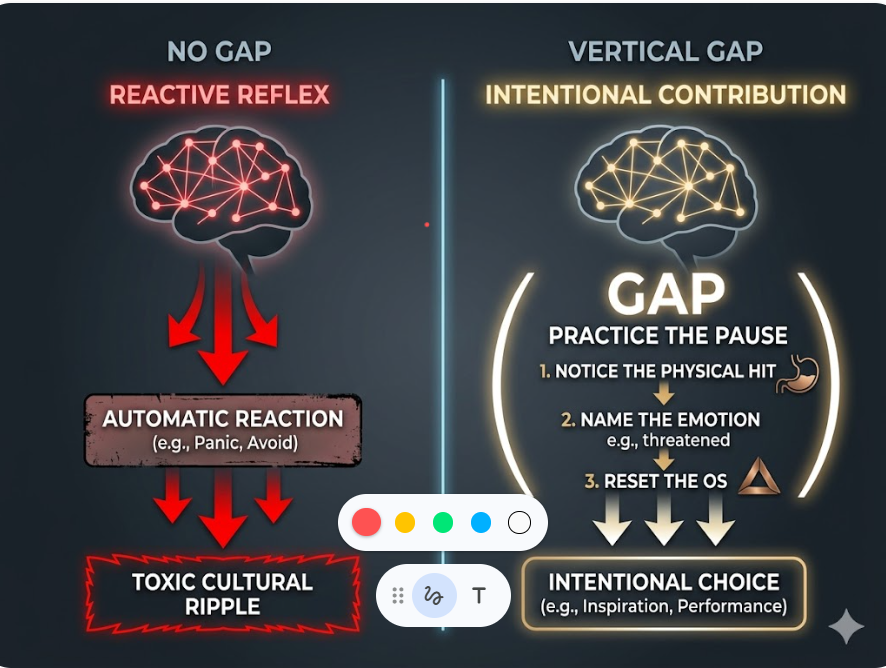
Leadership training often ignores the "Inner Work" required for true growth. If a board member challenges you and you become defensive, your ego has taken the wheel. An Observing Mind creates a vertical gap between stimulus and response, allowing for intentionality.
Watching the Internal Weather
Cultivating this skill allows you to watch your internal weather without getting soaked by the rain. You notice the storm of anxiety or anger, but you do not let it dictate the strategy. This distance is the difference between a reactive manager and an enlightened leader.
The First Step in System Upgrades
Before you can upgrade the "apps" of your leadership, you must stabilize the hardware. The Observing Mind acts as the diagnostic tool for your internal software. It identifies the bugs in your processing before they manifest as cultural toxicity within your team.
Phase 1: Preparing the Ground
The Subject-Object Shift
In Terry Russell’s methodology, growth begins by "Preparing the Ground." This requires a fundamental shift from Subject to Object. When you are subject to an emotion like the need to control, it is you; by making it an object, you can study it.
Ploughing the Soil of the Mind
You cannot plant the seeds of Authenticity or Inspiration in soil hardened by reactivity. Cultivating an observing mind is the "ploughing" of that mental soil. It softens your rigid defenses and creates the space necessary for new, healthier leadership habits to take root.
Moving Beyond Personal Bias
An unobserved mind is a prisoner to its own history and biases. Preparing the ground means acknowledging that your "perspective" is often just a collection of old habits. Observation allows you to clear the field, ensuring your leadership is based on current reality.
The Anatomy of a Trigger
The Biological Hijack
High-pressure sectors like Pharma keep the nervous system in a "Threat Response" mode. This knocks the Observing Mind offline as the brain prioritizes survival over strategy. We train leaders to notice the physical hit—a tight jaw or hollow stomach—before the reflex takes over.
Breaking the Narrative Chain
Once a physical trigger occurs, the brain immediately creates a false narrative to justify the feeling. You might tell yourself, "They don't respect me." The Observing Mind interrupts this sequence at the start, preventing the "Story" from becoming a destructive corporate fact.
Managing the Ripple Effect
A triggered leader creates a toxic ripple that can paralyze an entire department. By observing your own biological hijack, you contain the emotional blast radius. This self-regulation is the most selfless act a leader can perform for their organization’s cultural health.
The External Observer: Seeing the System
Beyond Content to Process
An observing mind eventually expands to see the "unspoken" data in the room. Instead of focusing solely on content, an enlightened leader notices the "process." You begin to see how people are relating, rather than just what they are saying in the meeting.
Identifying Energy Leaks
By observing without the need to "fix," you gather the raw data needed for a true system upgrade. You notice where energy is leaking or who is being silenced by the dominant voices. This systemic sight allows you to architect solutions that address root causes.
The Power of Silent Data
Silent data—the things people don't say—is often more valuable than the minutes of the meeting. An observing mind picks up on the tension, the hesitation, and the forced agreement. This awareness allows you to address the "elephant in the room" with precision.
Practicing the Pause
Theory vs. Real-Time Practice
This is a practice, not a theory; you learn by doing it in the heat of the moment. Reading about observation is useful, but the real work happens when the pressure is on. It is the ability to remain the "Observer" while the boardroom is in chaos.
The Architecture of the Pause
We advocate for the "Practice of the Pause"—stopping before a reactive email or a sharp retort. This five-second window is where your power lies. It is the moment you choose to lead from a Pillar of excellence rather than a Limiting Attitude.
Resetting the Operating System
If you find yourself in a state of reactivity, the most "Enlightened" thing you can do is wait. The pause allows the prefrontal cortex to come back online. This brief reset ensures that your next action is an intentional contribution to the organization’s success.
The Foundation of High Performance
Speed vs. Effectiveness
"Observing" is not passive; it is the fastest way to achieve sustainable results. Reactive leaders create "Cultural Debt" through snap judgments that must be fixed later. An observing mind allows you to get it right the first time, saving time and capital.
Building Trust Equity
Consistency is the bedrock of trust. When a leader is an observer, they are no longer volatile or unpredictable. Your team begins to trust your reactions because they know you are operating from a place of awareness rather than a place of hidden impulse.
Eliminating Cultural Toxicity
Most toxic behaviors in the workplace are simply unobserved reactions. By modeling the Observing Mind, you set a new standard for the entire culture. You move the organization away from a "blame" culture and toward a culture of high-performance accountability.
The Battle Story: The "Urgent" Crisis
The Decisiveness Trap
We coached a Director who mistook frantic speed for effectiveness during a product recall. He believed his shouting and "decisiveness" were helping the situation. In reality, his team was terrified, and critical information was being withheld to avoid his wrath.
The Shift to Awareness
By cultivating an observing mind, he realized his "decisiveness" was actually a cover for his own panic. He was trying to control the external world to soothe his internal fear. Once he observed this, he was able to change his approach and engage his team.
The Multi-Million Dollar Result
Once he stayed calm and listened to his engineers, they discovered a systemic flaw that saved the firm millions. He didn't need more "crisis management" training. He simply needed the capacity to observe his own panic before it dictated his next move.
Conclusion: Start Preparing the Ground
A Prerequisite for Excellence
The journey to Enlightened Leadership begins with a new set of eyes, not a new strategy. Without an observing mind, you are a passenger in your own leadership. It is the absolute prerequisite for every pillar we teach at The Russell Partnership.
Join the Practice
Sustainable results require you to look in the mirror before you look at the spreadsheet. We invite you to move beyond the "Action Bias" and start the vertical upgrade today. The future of your organization depends on the quality of your internal sight.
