
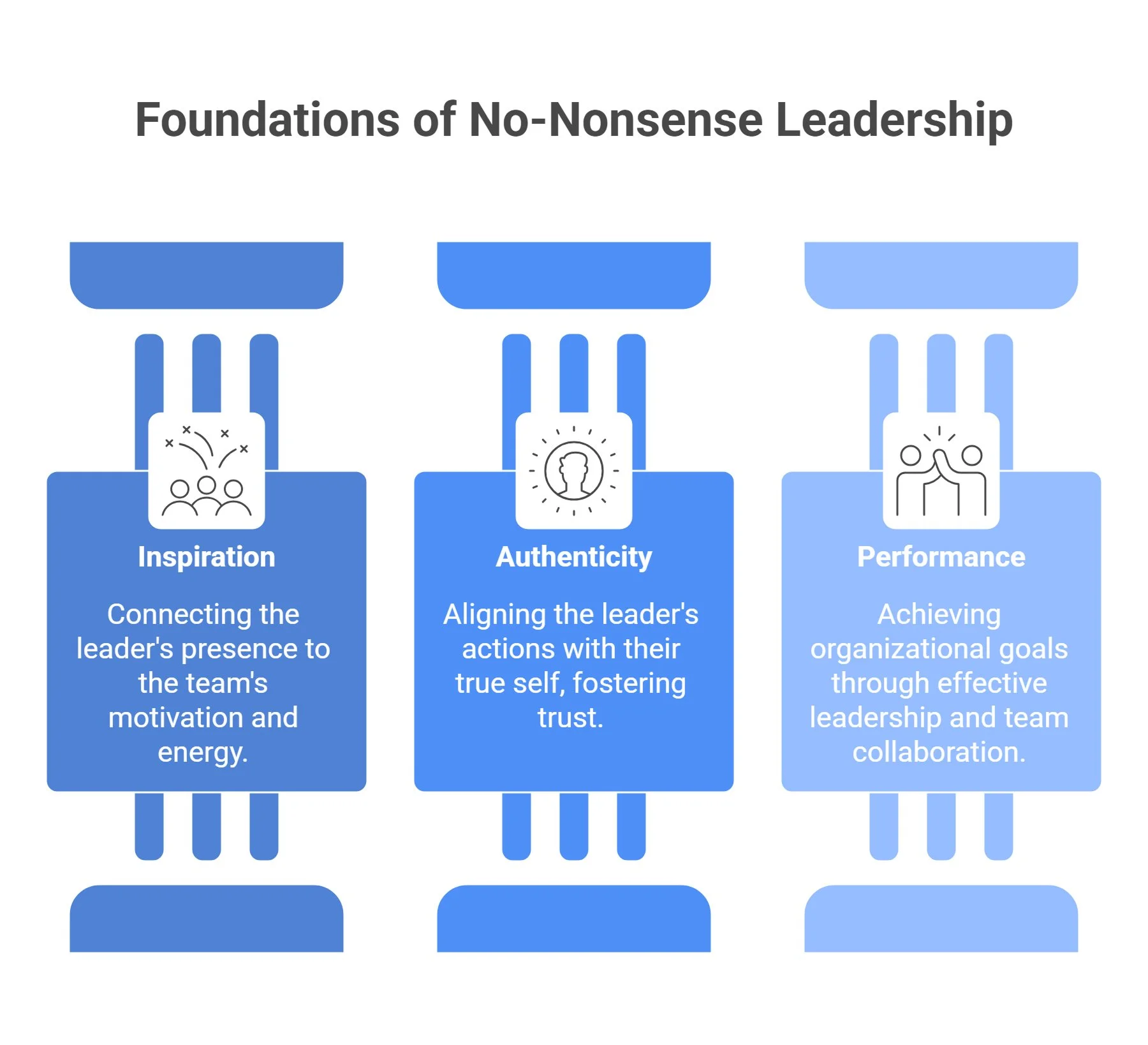
The 3 Pillars of No-Nonsense Leadership: Inspiration, Authenticity, and Performance
Most leadership books treat the subject like a destination. They suggest that once you reach a certain level of success, you’ve "arrived." You are the leader. You are the expert. You have the answers.
That is the first mistake.
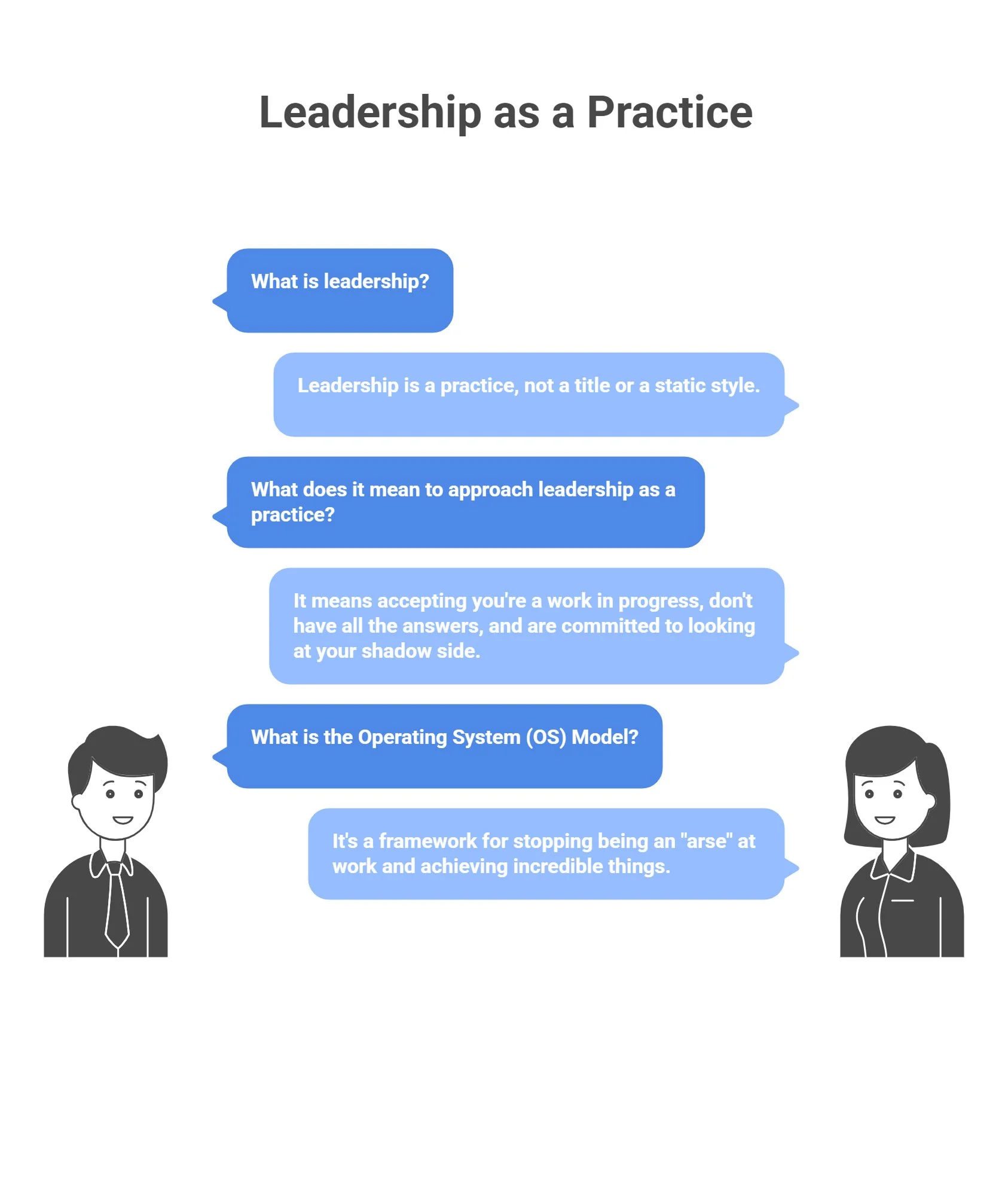
In my coaching practice and the "No-Nonsense" framework I’ve developed, we view leadership differently. Leadership isn’t a title or a static "style" you pick off a shelf. It is a practice. To approach leadership as a practice is to accept that you are a work in progress. It’s an admission that you don't have all the answers and that you are committed to the messy, often uncomfortable work of looking at your own "shadow side."
If you want to stop being an "arse" at work and start achieving incredible things, you have to understand the Operating System (OS) Model.
The OS Model: It’s Not About You, It’s About "Us"
The mythology of the "exceptional individual" has poisoned corporate culture. We’ve been taught to put leaders on pedestals, which leads teams to tolerate mistreatment and poor management that they should be calling out.
My OS Model counters this myth. It isn't a personality test that gives you a "type." It doesn't nail you down or put you in a box. Instead, it offers a snapshot of how you are showing up right now.
Leadership is relational. A leader only exists in relationship to others. I use a specific phrase in my coaching to simplify this:
“Without US (the team), there is no IT (the organisation) and without Me (looking deeply at self) there is no US.”
If you aren't looking deeply at "Me," you are effectively breaking the "Us," which ultimately kills the "It." This is where the 3 Pillars come in. They aren't just abstract concepts; they are the measurable results of your Operating System in action.
Pillar 1: Inspiration (Connecting the "Me" to the "Us")
In the OS Model, Inspiration isn't a performance; it’s a connection.
If you are stuck in a "Self-Story" where you are the hero and everyone else is just a supporting character, you cannot inspire. Real inspiration happens when a leader shifts the focus from the individual to the collective. When you acknowledge that you are a "work in progress," you give your team permission to be human too.
Inspiration is the bridge between "Me" and "Us." It’s what happens when a leader stops trying to be "exceptional" and starts being present. When you cut through the ego-driven need to have all the answers, you create space for the team to find those answers with you. That is where true momentum comes from.
Pillar 2: Authenticity (Closing the Gap)
There is often a massive gap between how a leader likes to think of themselves and what their teams actually experience.
Authenticity in the OS Model is about closing that gap.
As a coach, I see this daily. A leader might think they are being "decisive," but their team experiences them as "bullying." A leader might think they are being "thorough," but their team experiences "micro-management." The OS Model maps these behaviors—both helpful and unhelpful—to show you the reality of your impact.
Authenticity is the courage to look at your shadow side. It’s about getting to know your limiting attitudes. If you aren't willing to see where you are failing, you can't "plug the gap." No-nonsense leadership requires you to stop believing your own "self-story" and start listening to the data provided by your relationships with your team.
Pillar 3: Performance (The "IT" of the Organisation)
We are all here to achieve something. That is the "IT"—the organisation’s goals. But as the OS Model shows, you cannot get to "IT" by skipping over "Me" and "Us."
High performance is a byproduct of a healthy relational system. When a leader revisits their OS regularly, they can see how their behaviors are either driving performance or stifling it.
Because the OS isn't static—it changes month by month depending on what’s going on in your environment—your performance isn't static either. If you’re under pressure, your "shadow side" might take over. You might become more controlling, less communicative, or more reactive. The OS Model helps you identify these shifts in real-time so you can adjust your behavior before the "IT" (the results) suffers.
Why You Need a "No-Nonsense" Upgrade
Most leadership models describe you and leave you there. The OS Model demands that you move.
It is a tool for self-development. By mapping your strengths and struggles as they show up in interactions with your team, you can finally see what’s real. You can cut through the fluff and the corporate jargon to see the behaviors and communications that are actually shaping your team’s experience.
If you want to build an organisation that does incredible things, you have to start with the person in the mirror. You have to be willing to be a "work in progress."
Stop being the bottleneck in your own business.
Stop letting your ego run an outdated Operating System that pushes people away and creates "pedestal" leadership. It’s time to move toward a collective, relational, and deeply human way of leading.
Join the Waitlist: Be the First to Know When the New Book Drops.
Are you ready to look deeply at your own "Me" to build a stronger "Us"?
My upcoming book is a complete breakdown of the OS Model. It provides the tools you need to map your own behaviors, identify your shadow side, and close the gap between the leader you think you are and the leader your team needs.
Don't stay stuck in an outdated model of leadership. Join the waitlist now to get the book, the OS Model toolkit, and launch updates.
Practice Of Enlightened Leadership — The Russell Partnership
